Polished Concrete Floors: Advantages and Disadvantages

Polished concrete has become one of the most popular floors in Ireland over the last decade, in homes, offices, shops and hotels alike. Like any floor, it has real strengths and a few things to plan for. Here is an honest look at both, from a team that has been polishing concrete since 1999.
The advantages of polished concrete floors
It lasts as long as the building
Your slab becomes the finished floor. There is no coating to wear through or delaminate, and polished concrete is highly resistant to wear, scratches and most chemicals.
Very low maintenance
A sweep and a mop with a pH neutral cleaner is all it needs. No waxing, sanding or varnishing, and no grout lines to trap dirt. Read our guide to maintaining a polished concrete floor.
Good value over its lifetime
If you are pouring a slab anyway, polishing it means there is no second floor to buy, fit or replace later. See how much a polished concrete floor costs.
Looks great, in many finishes
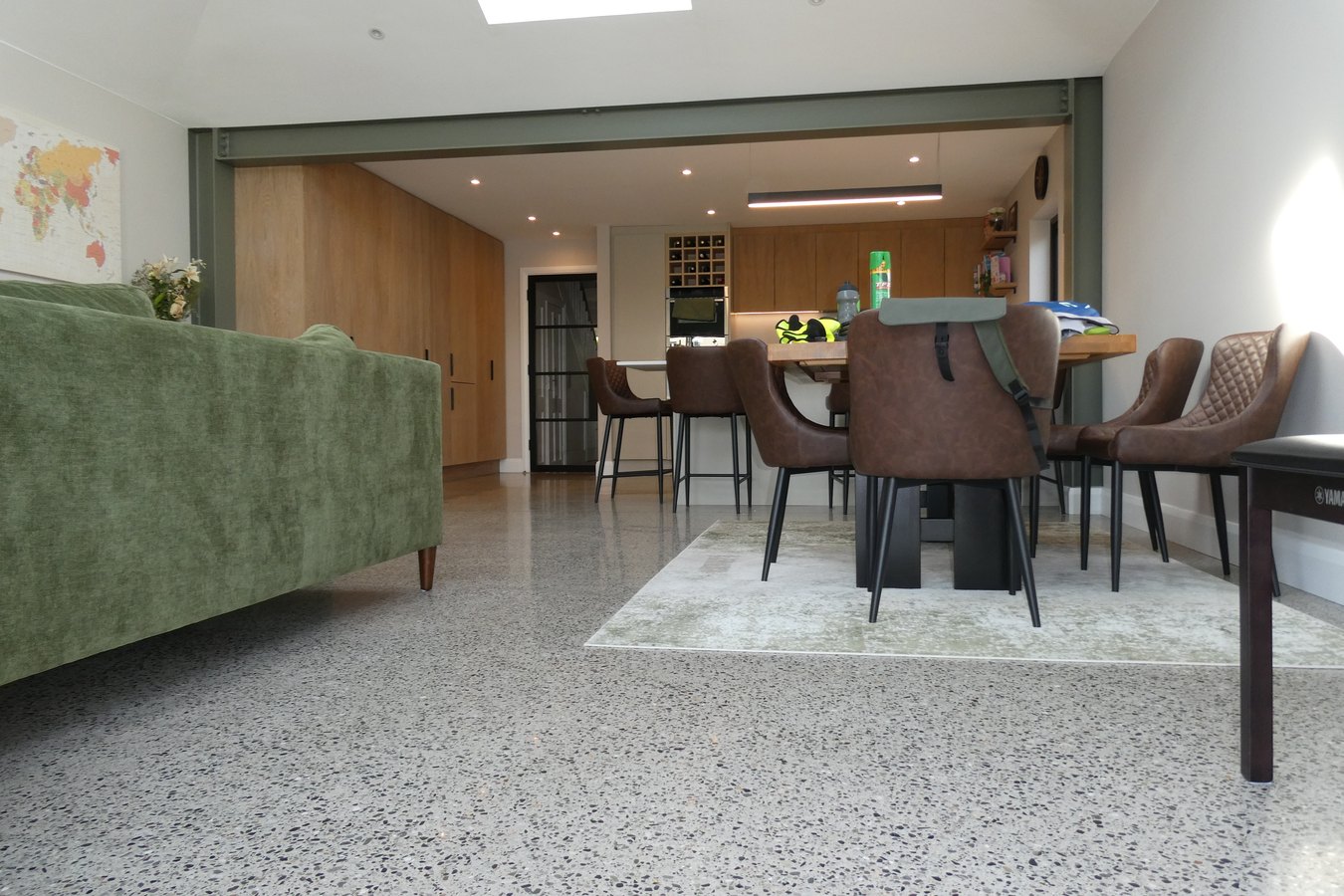
From a smooth, stone free gold finish to a high shine platinum floor showing the stone in the mix, there is a look for every space. See our guide to polished concrete finishes.
Brighter rooms
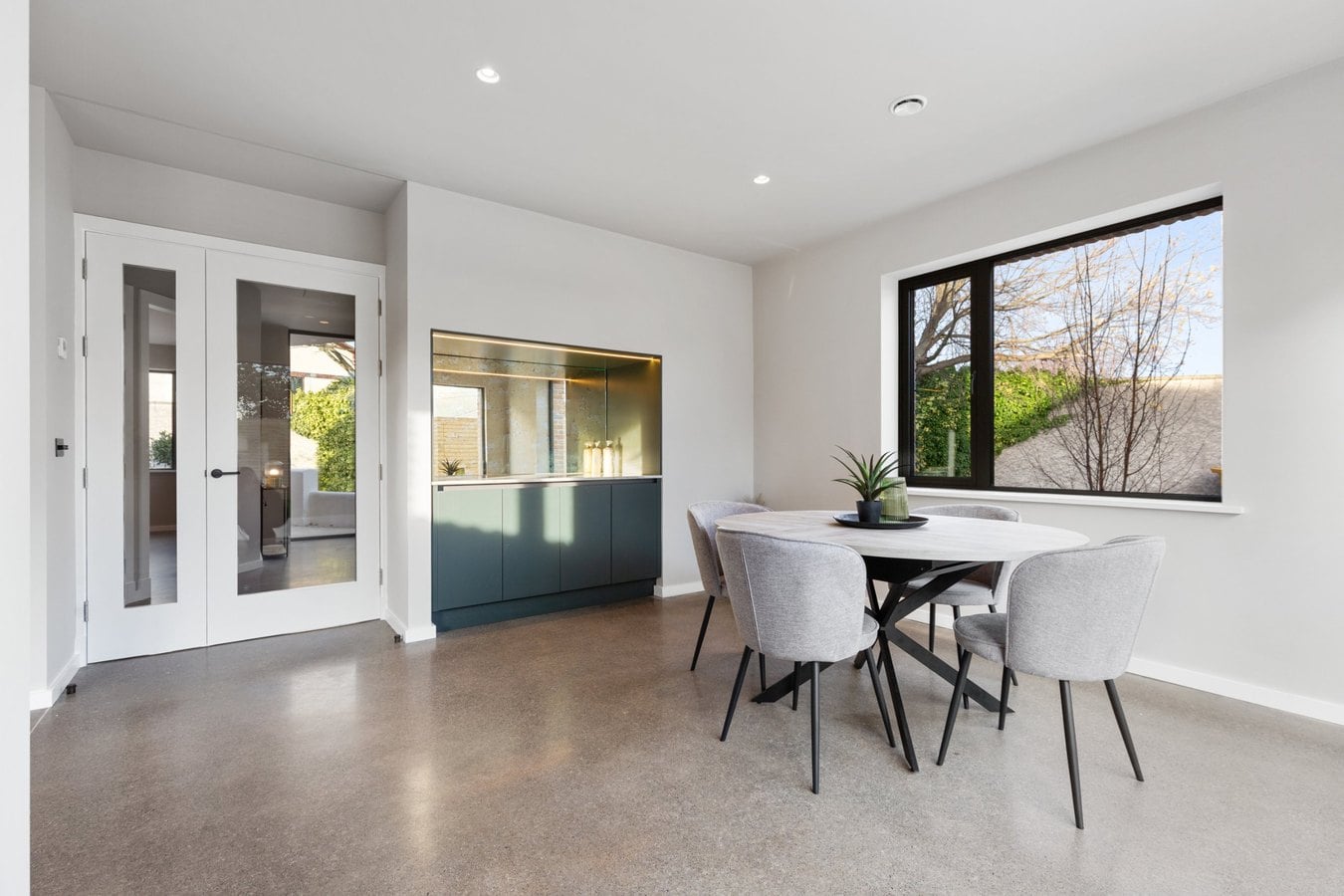
Light bounces off the polished surface, so rooms feel brighter and more open, and you may need less artificial light.
Ideal with underfloor heating
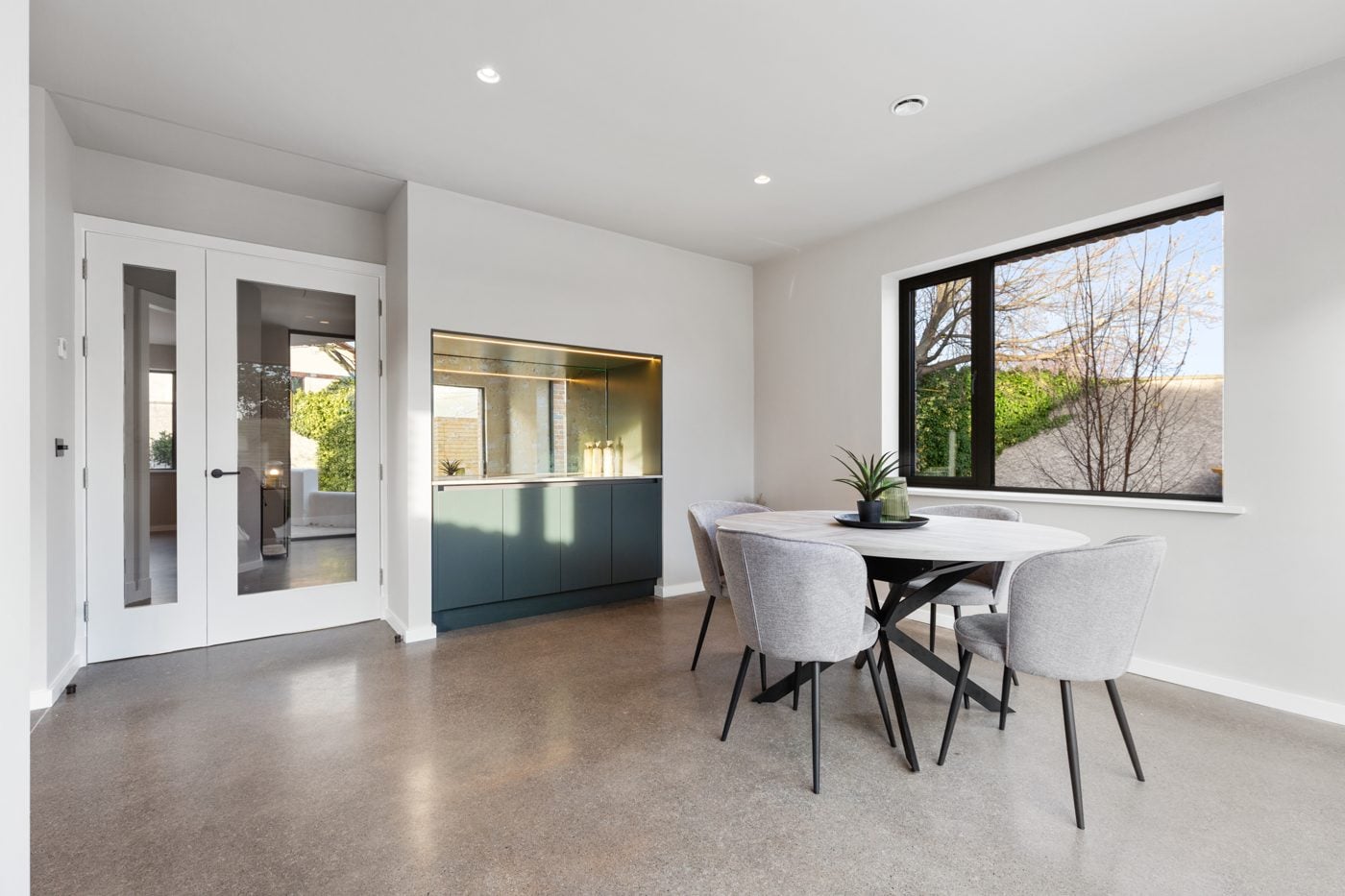
Concrete holds and releases heat well, which makes polished concrete one of the best floors to use with underfloor heating.
Healthy and hygienic
It is dust free and hypoallergenic, and it does not harbour mould, bacteria or allergens, which makes it a good choice for anyone with allergies or asthma.
A sustainable choice
Using the slab as the finished floor avoids the materials and energy needed for a separate floor covering. Concrete is sourced locally, and only water based hardeners and sealers are added.
The disadvantages, and how to plan for them
It is a hard floor
Polished concrete can feel cold underfoot without underfloor heating, and like any hard floor it can be noisier than carpet or timber. Rugs and underfloor heating solve most of this.
Hairline cracks can appear
Concrete naturally moves, so fine hairline cracks can appear over time. Good joint planning before the pour keeps this to a minimum, and many people see it as part of the character of a real concrete floor.
It depends on a good pour
Most problems with polished concrete start at the pour. Uneven stone, foot marks or a wavy surface are usually permanent. That is why we advise on the concrete specification before the pour, and why in Leinster we work with a trusted pour partner so one team looks after your floor from start to finish.
Limited colour choice
The colour comes from the local sand and stone in the mix, usually a grey to dark grey in Leinster. If you want a particular colour or pattern, terrazzo or microcement may suit you better.
It needs a concrete slab
Most screeds are not hard enough to be ground and polished, and we do not lay our finishes over timber floors. If you have a screed and want a seamless look, talk to us about microcement or terrazzo instead.
Is polished concrete right for you?
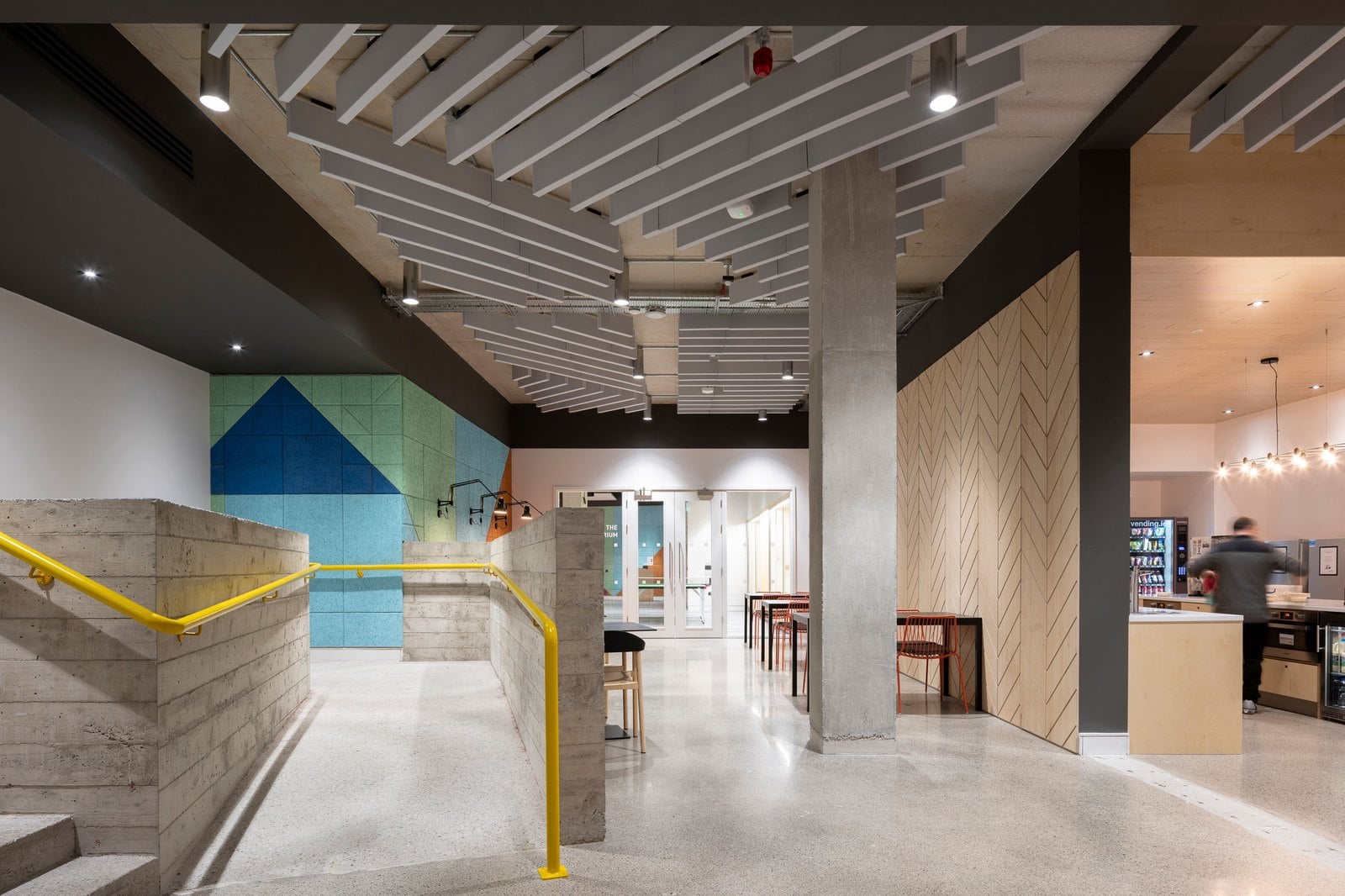
For most homes and businesses, yes. It is durable, easy to live with and good value over its lifetime, as long as it is planned properly from the start. Talk to us before the pour and we will help you get it right. Send us your drawings or visit our Harold’s Cross showroom by appointment, and see recent polished concrete projects.
Common questions
Is polished concrete slippery?
Polished concrete can be finished to meet any slip test requirement. Entrances and busy areas can be given a lower polish for more grip.
Does polished concrete crack?
Fine hairline cracks can appear as concrete moves. Planning control joints before the pour keeps this to a minimum.
Is polished concrete cold?
It can feel cool without heating, but it is one of the best floors to pair with underfloor heating.
Find out more about our polished concrete floors, from pour and polish across Leinster to polishing existing floors nationwide.