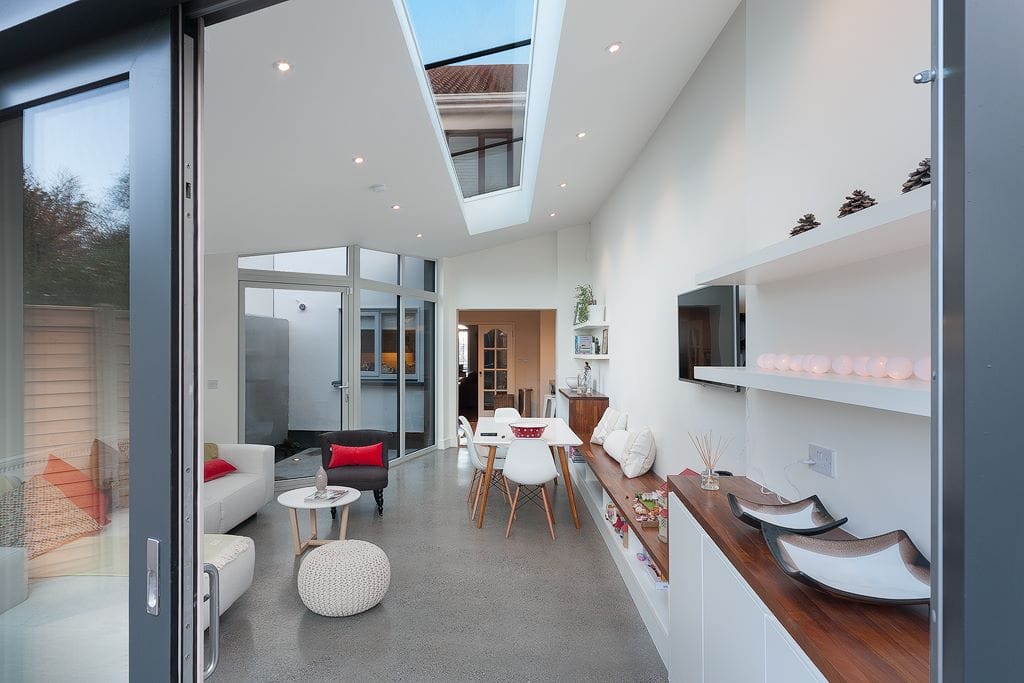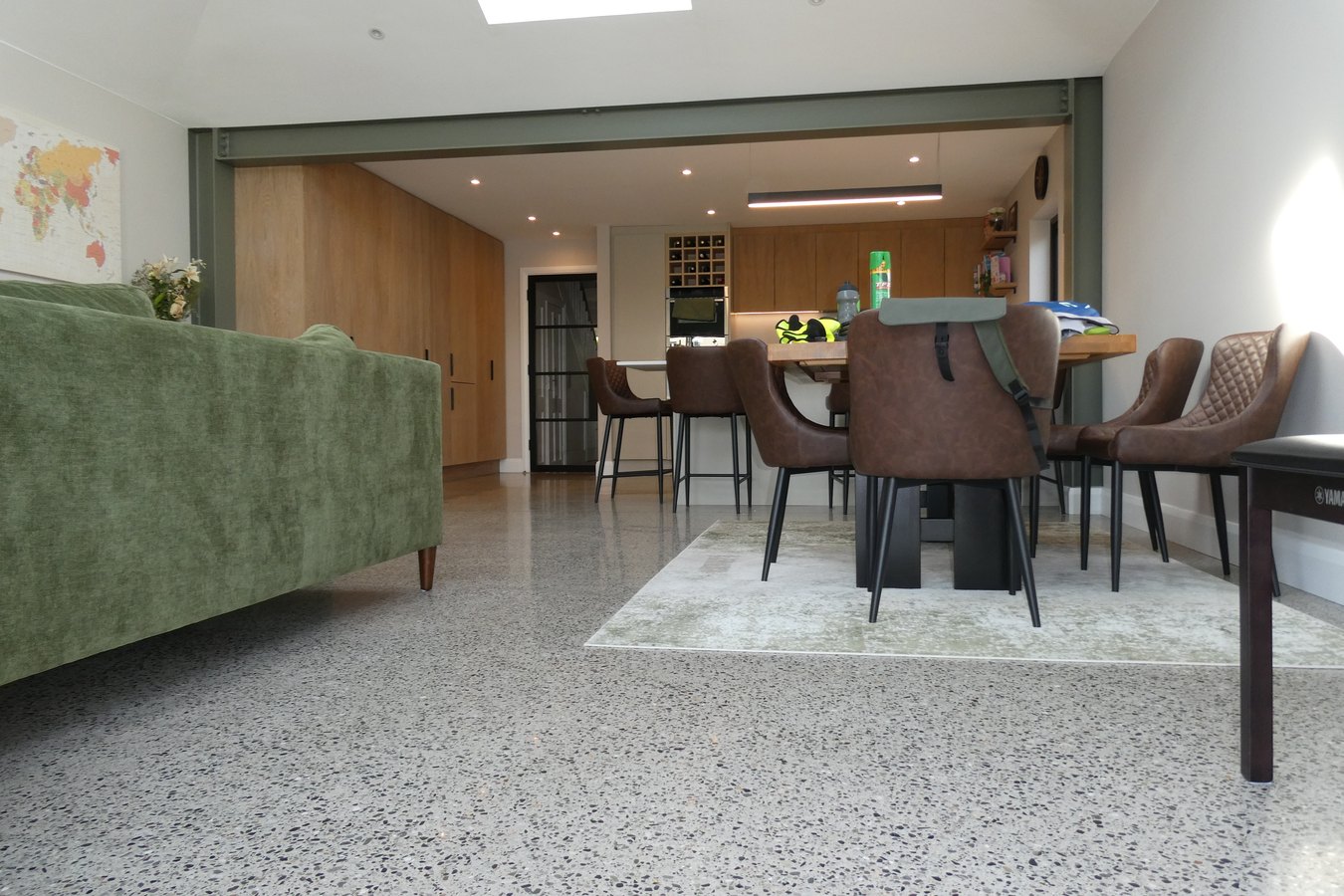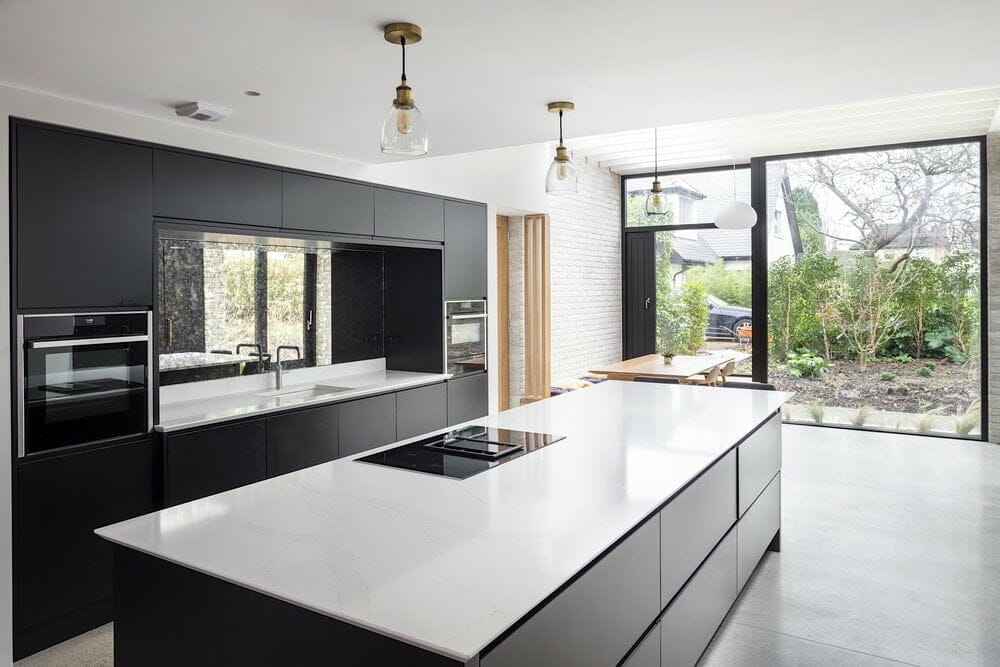
Polished Concrete Floor Cost in Ireland: What Affects the Price
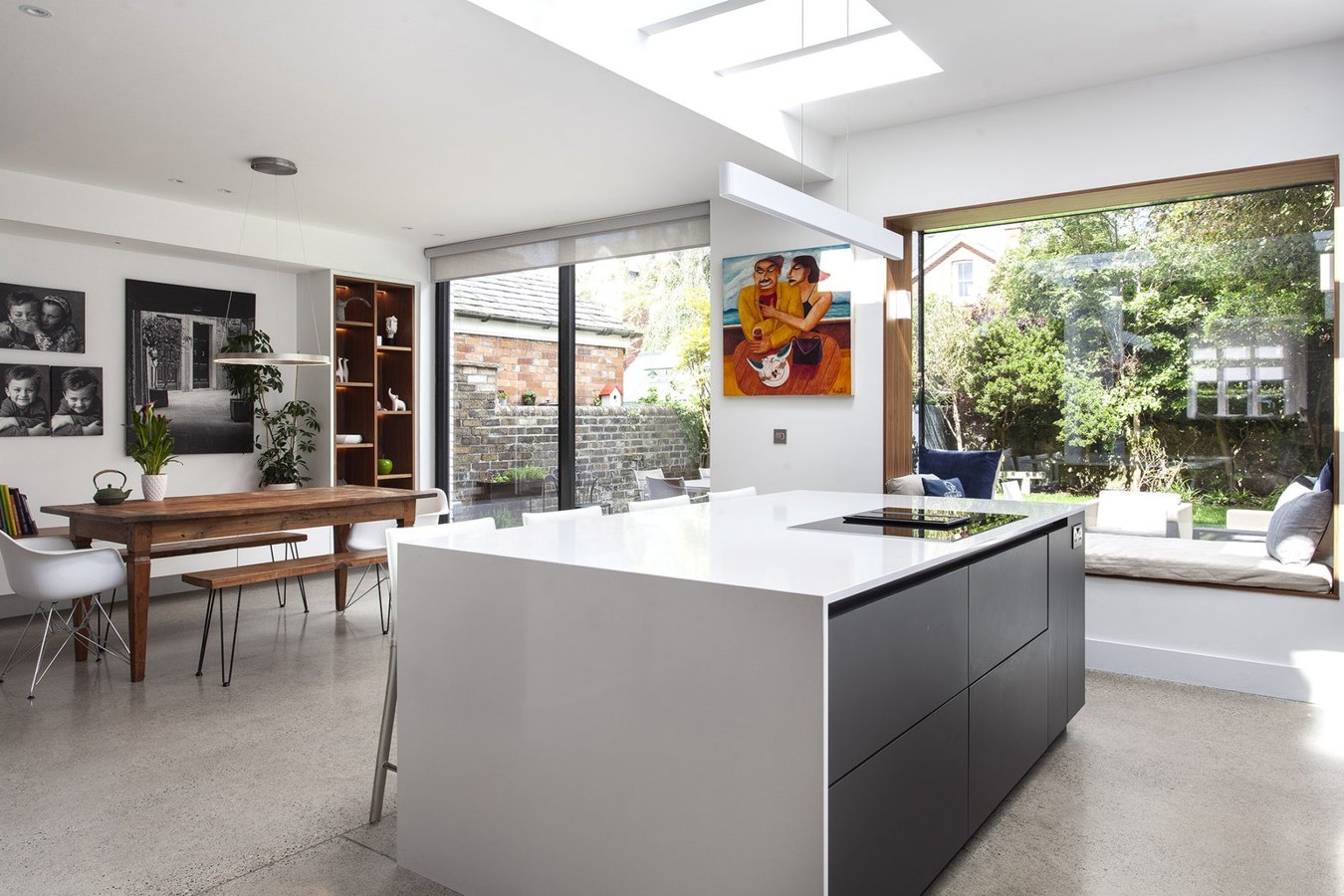
The question we are asked most often about polished concrete is simple: how much does it cost? The honest answer is that every floor is priced individually, but the things that drive the price are always the same. This guide walks through each of them, so you can budget with confidence and know what to ask for when you get quotes.
The quick answer
Every polished concrete floor is priced individually, because the finish you choose, the size of the floor, the edges and the condition of the slab all change the cost. Large open floors come in at a lower rate per square metre, and small or very detailed floors cost more. If you are laying a new slab, the pour is priced separately from the polishing.
The best way to get an accurate figure is to send us your drawings and we will price your floor.
What affects the cost of a polished concrete floor
1. New slab or existing concrete
If you already have a concrete floor that is suitable for polishing, you only pay for the grinding and polishing. Most new builds and extensions need a concrete slab anyway, whatever floor goes on top, so the real extra cost of polished concrete is the difference between a standard pour and a pour done to a polishing specification, plus the polishing itself.
In Leinster we work with a trusted pour partner, so one team looks after your floor from the pour to the final polish. Outside Leinster we offer our polishing service on your slab.
2. The size of the floor
Larger floors cost less per square metre. We can use bigger machines, put more people on site and spend less time on our hands and knees polishing edges. A small bathroom or utility on its own will always cost more per metre than a full ground floor.
3. The finish you choose
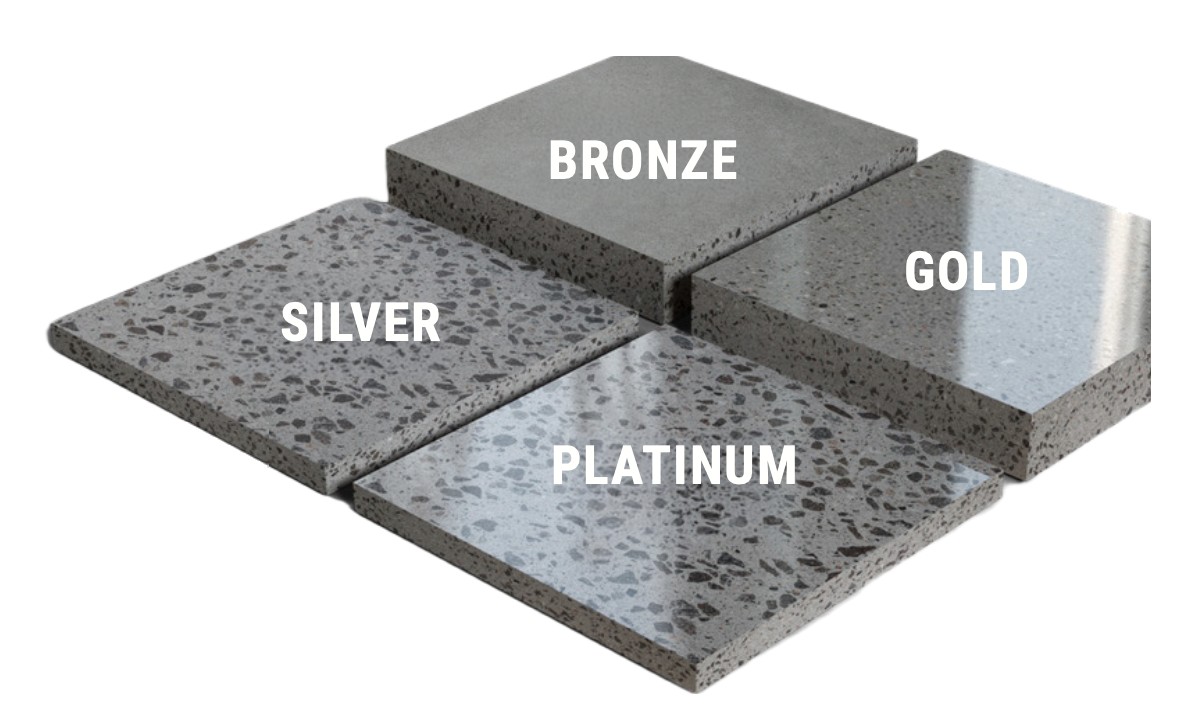
The deeper the grind and the higher the shine, the more time and diamond tooling the floor takes, and the higher the price.
- Bronze is polished, not ground, so it is the lowest cost option. Because nothing is ground out, the pour has to be very even, as every mark in the surface will show.
- Gold is a light 1mm grind for a smooth, largely stone free look.
- Silver is ground about 3mm to reveal the sand, gravel and aggregate, left matt or satin.
- Platinum is ground about 3mm and polished up to 3,000 grit for the highest shine. It takes the most steps, so it costs the most, and it is the most popular choice in homes.
See our full guide to polished concrete finishes for photos of each one.
4. Edges, walls and built in units
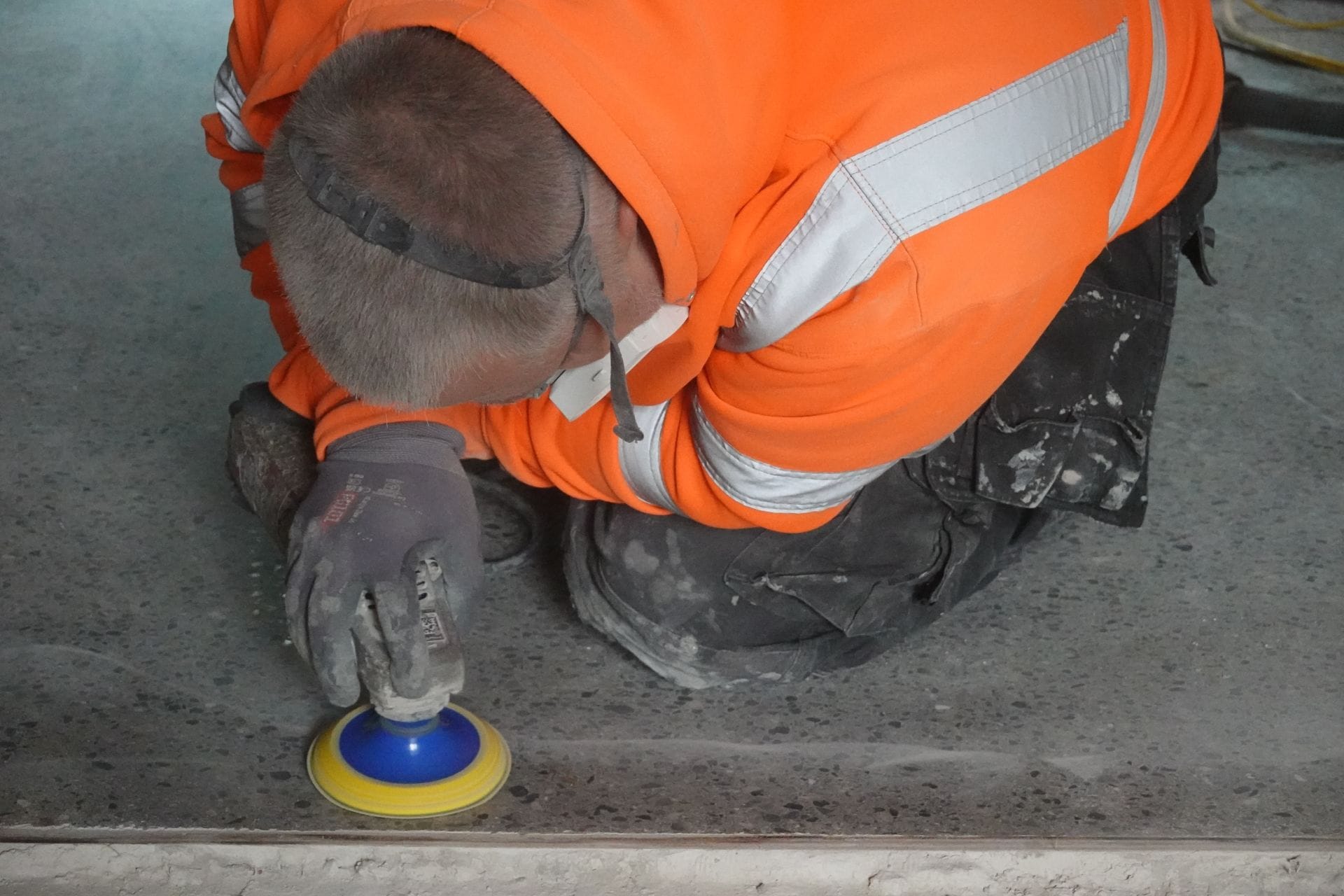
Polishing is labour intensive, and edges polished by hand take far longer than open floor. If possible, polish the floor before stud walls, kitchens, bathrooms and skirting go in. That lets us bring in larger machines, gives a more even finish right to the walls, and brings the cost down.
5. Repairs, joints and extras
Cracks, damage from other trades or a poorly finished edge may need repairs before polishing. Decorative extras such as brass or aluminium joint strips, polished steps or a non slip finish in certain areas will also add to the price. We will point all of these out when we price your floor.
6. Location
We are based in Harold’s Cross, Dublin, and polish floors all over Ireland. For projects further away, travel and accommodation are factored into the quote.
Why getting the pour right saves you money
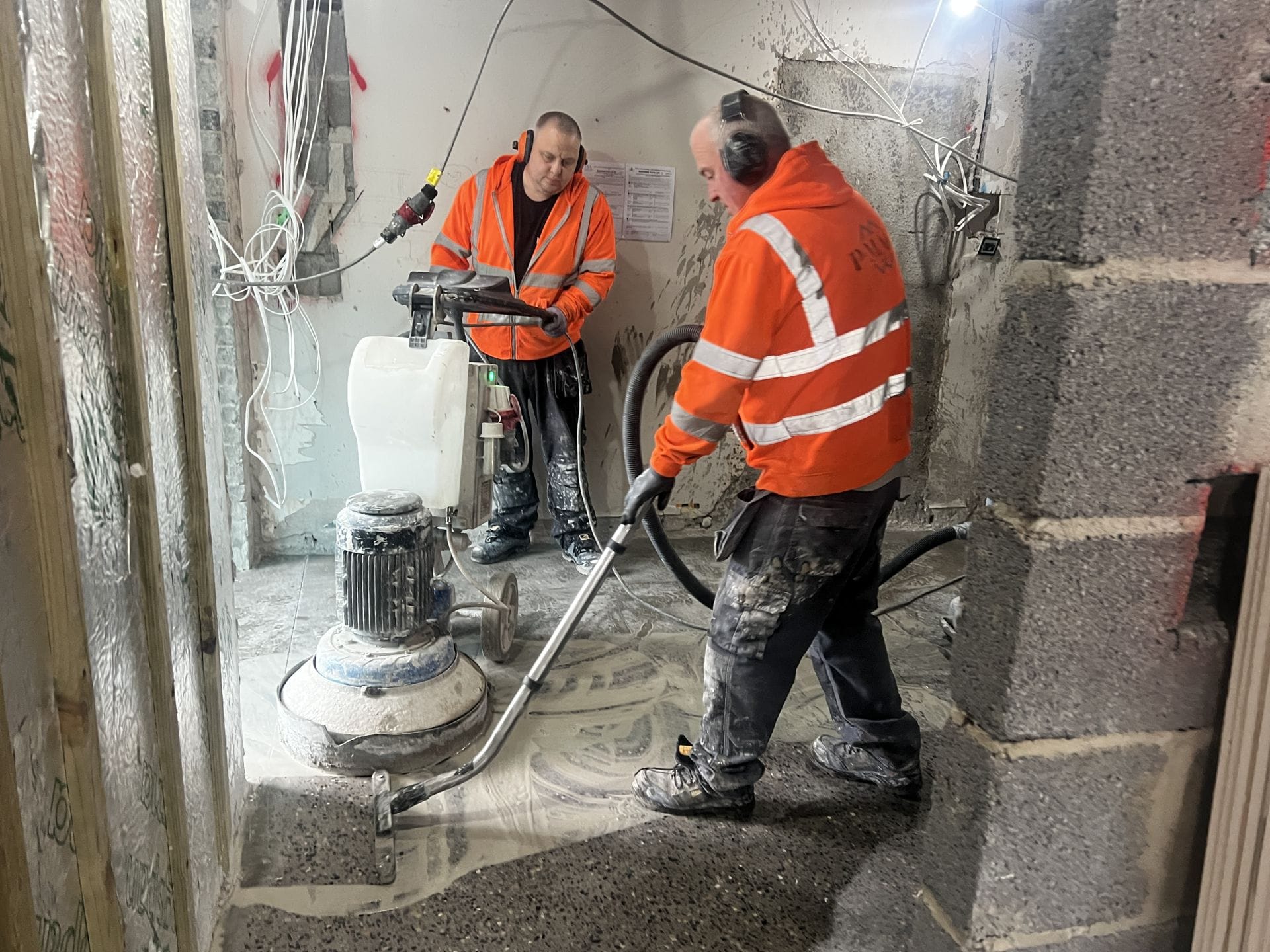
It is the pour, not the polish, that decides how a polished concrete floor turns out. A slab poured with polishing in mind will cost a little more than a standard slab, but it is your finished floor. Fixing a bad pour costs far more: extra grinding to level it, filling cracks, and in some cases sandy patches or uneven stone that can never be repaired.
A good pour for polishing should be:
- Placed without adding extra water to the mix on site
- Power floated flat and level, right up to the edges
- Protected from foot marks and from other trades once it is laid
- Planned with control joints so cracking is managed
- Left to cure for 28 days before polishing
Talk to us before the pour and we will advise on the concrete specification. Read our tips on pouring concrete for a polished floor.
How the cost compares to other floors
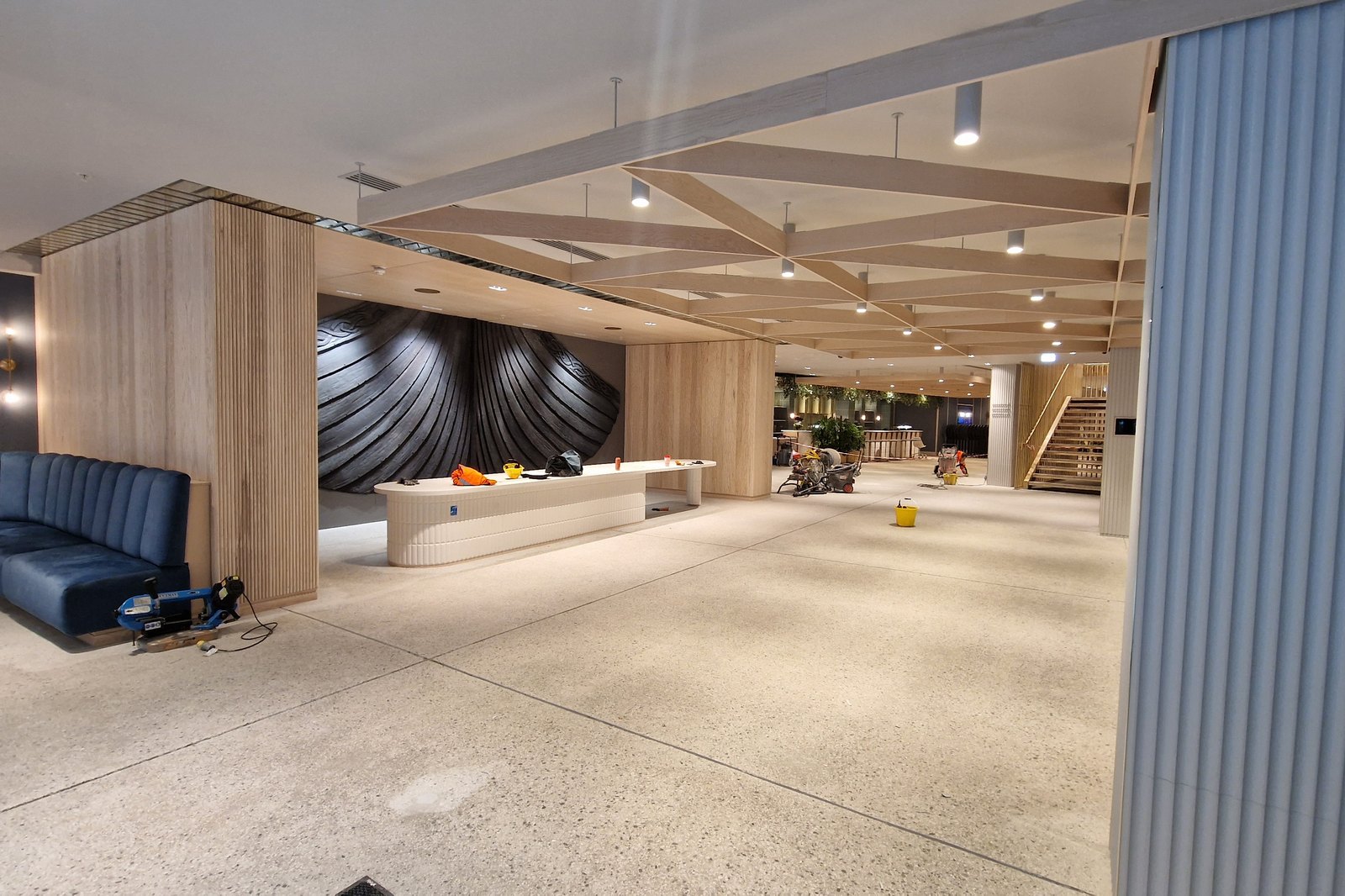
Polished concrete compares well with a good stone or porcelain floor, solid wood or quality carpet, and it often works out cheaper over the life of the building. There is no new material to buy and fit, nothing to sand or varnish, and no grout lines. An occasional reseal keeps it looking its best, and the floor lasts as long as the building.
How to get an accurate price
Send us your drawings or measurements through our contact page, tell us which finish you like and whether you need the slab poured as well, and we will come back with a quote. You are also welcome to see the finishes in person at our Harold’s Cross showroom by appointment.
Explore our polished concrete floors and see recent polished concrete projects.
Common questions about polished concrete cost
Is polished concrete cheaper than tiles?
Often, yes, especially over the life of the floor. If you are pouring a slab anyway, polishing it avoids the cost of buying and laying a second floor on top.
Does the finish change the price?
Yes. Bronze is the lowest cost because it is polished rather than ground. Platinum costs the most because it takes the most grinding and polishing steps.
Can you polish my existing concrete floor?
In many cases, yes. We look at the slab first to check it is suitable and advise on the best finish for it.
How long does it take?
We polish once the slab has cured for 28 days and are usually on site for about a week for a typical home.